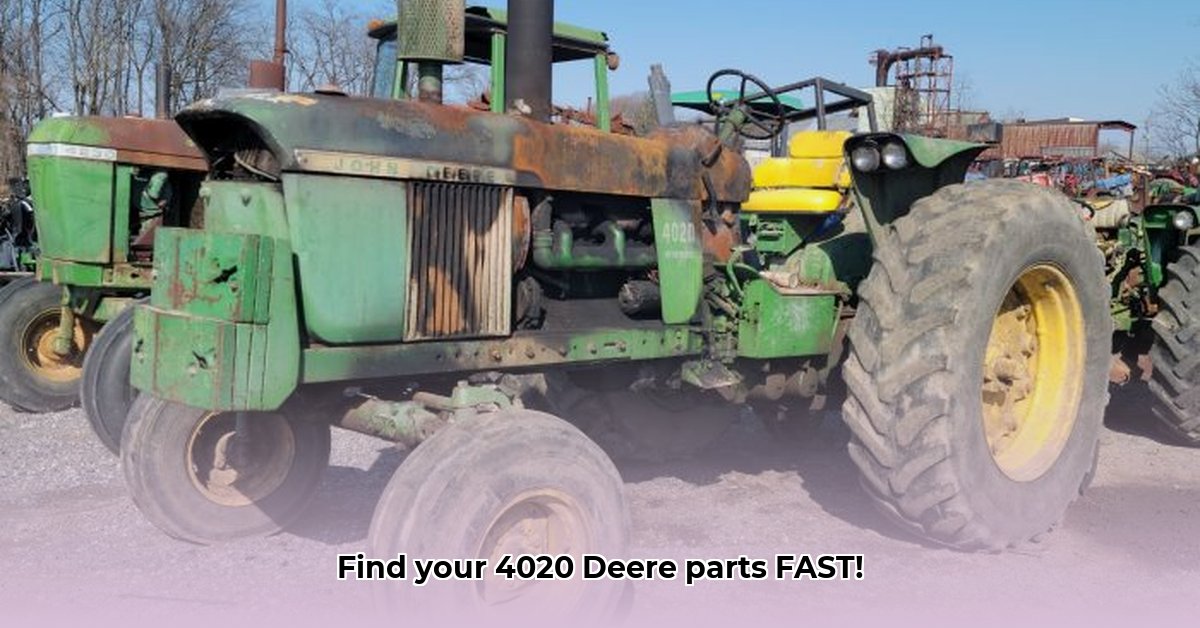
Keeping your John Deere 4020 running smoothly requires access to the right parts at the right price. This guide helps you navigate the world of 4020 parts sourcing, from finding the perfect fit to understanding cost-benefit analyses. We'll cover everything from OEM parts to salvage yards, ensuring you get your tractor back to peak performance efficiently. For additional resources, check out this helpful Georgia dealer.
Where to Find John Deere 4020 Tractor Parts: A Practical Guide
Finding the right parts for your 4020 can sometimes feel like a scavenger hunt. However, with a strategic approach, you can locate the components you need, whether it's a minor repair or major overhaul. This guide outlines your options, highlighting the pros and cons of each approach to help you make informed decisions.
Sourcing Your John Deere 4020 Parts: A Multi-Pronged Approach
Your search for 4020 parts could involve several avenues:
1. John Deere Dealers (OEM Parts): These are your go-to for guaranteed authenticity and quality. John Deere parts are designed and engineered specifically for your 4020, ensuring a perfect fit and maximizing longevity. However, they tend to come with a premium price tag.
- Pros: Guaranteed fit and superior quality, extensive parts diagrams and support from dealership staff.
- Cons: Highest price point, potential for longer wait times, especially for less common parts.
2. Aftermarket Part Suppliers: They offer cost-effective alternatives to OEM parts. Many reputable suppliers offer quality parts at a fraction of the OEM price. It's crucial to perform due diligence and check reviews before purchasing to ensure quality and compatibility.
- Pros: Significantly lower cost, often quicker shipping times.
- Cons: Quality can vary; thorough research is required to ensure compatibility and reliability. Warranties may be shorter or non-existent.
3. Online Marketplaces (eBay, Amazon, etc.): These platforms offer a vast selection of John Deere 4020 parts, both new and used. The diversity is a major advantage, but buyer beware! Thoroughly vet sellers, checking reviews and return policies before committing to a purchase.
- Pros: Wide selection, potential for significant discounts, convenient browsing.
- Cons: High risk of encountering counterfeit or damaged goods, longer shipping times, potential for scams.
4. Tractor Salvage Yards: This option requires more hands-on work, but you can find parts at significantly lower prices than new ones. The condition of used parts varies widely; always inspect carefully before purchasing.
- Pros: Potentially substantial cost savings, chance of finding rare or discontinued parts.
- Cons: Requires careful inspection to assess part condition; potential for hidden damage. Finding the right part might require extensive searching.
Identifying Your John Deere 4020 Parts: Precision is Key
Accurate part identification is crucial. Your 4020's operator's manual is your first resource; it contains detailed diagrams and part numbers. The John Deere website also offers online parts catalogs. When in doubt, take high-quality photos of the part you need to aid in identification. Using the correct part number guarantees that you receive the correct component.
Cost Considerations: A Balanced Approach
The price difference between OEM and aftermarket parts can be substantial. OEM parts offer superior quality and longevity, justifying their higher cost for critical components. However, for less critical parts, choosing an aftermarket option can significantly reduce expenses. Always consider the total cost of ownership - including potential labor costs for installation - when making your decision.
Preventative Maintenance: An Investment in Longevity
Regular preventative maintenance significantly extends the lifespan of your 4020 components, substantially reducing the long-term cost of part replacements. Adhering to the maintenance schedule outlined in your owner's manual is crucial. This includes regular lubrication, fluid checks, and careful inspections. The saying "an ounce of prevention is worth a pound of cure" particularly applies here.
Troubleshooting and Repair: A Systematic Approach
Before ordering parts, thoroughly troubleshoot the problem. Your owner's manual often provides solutions for common issues. Online forums dedicated to John Deere 4020 tractors are also excellent resources, connecting you with a community of experienced owners. Don't rush into buying a new component if a simple adjustment might fix the problem.
Future-Proofing Your 4020: Strategies for Long-Term Success
As your 4020 ages, finding replacement parts may become increasingly difficult. Strategically storing commonly needed components can mitigate this risk. Emerging technologies such as 3D printing offer potential solutions for creating bespoke replacement parts. Regular inspection and preventative maintenance are your best defenses against part obsolescence.
Resource List: Your Go-To Guide
- John Deere Website: The official source for OEM parts and technical information.
- Reputable Online Retailers: Carefully research and choose reliable suppliers with strong customer reviews.
- Local Tractor Salvage Yards: A cost-effective option for used parts, requiring careful inspection.
- Online Forums (e.g., TractorByNet): Connect with experienced 4020 owners for advice and troubleshooting tips.
By following these strategies, you can efficiently and cost-effectively source parts for your John Deere 4020, ensuring its long-term reliability and performance. Remember, a well-maintained tractor is a profitable tractor.